
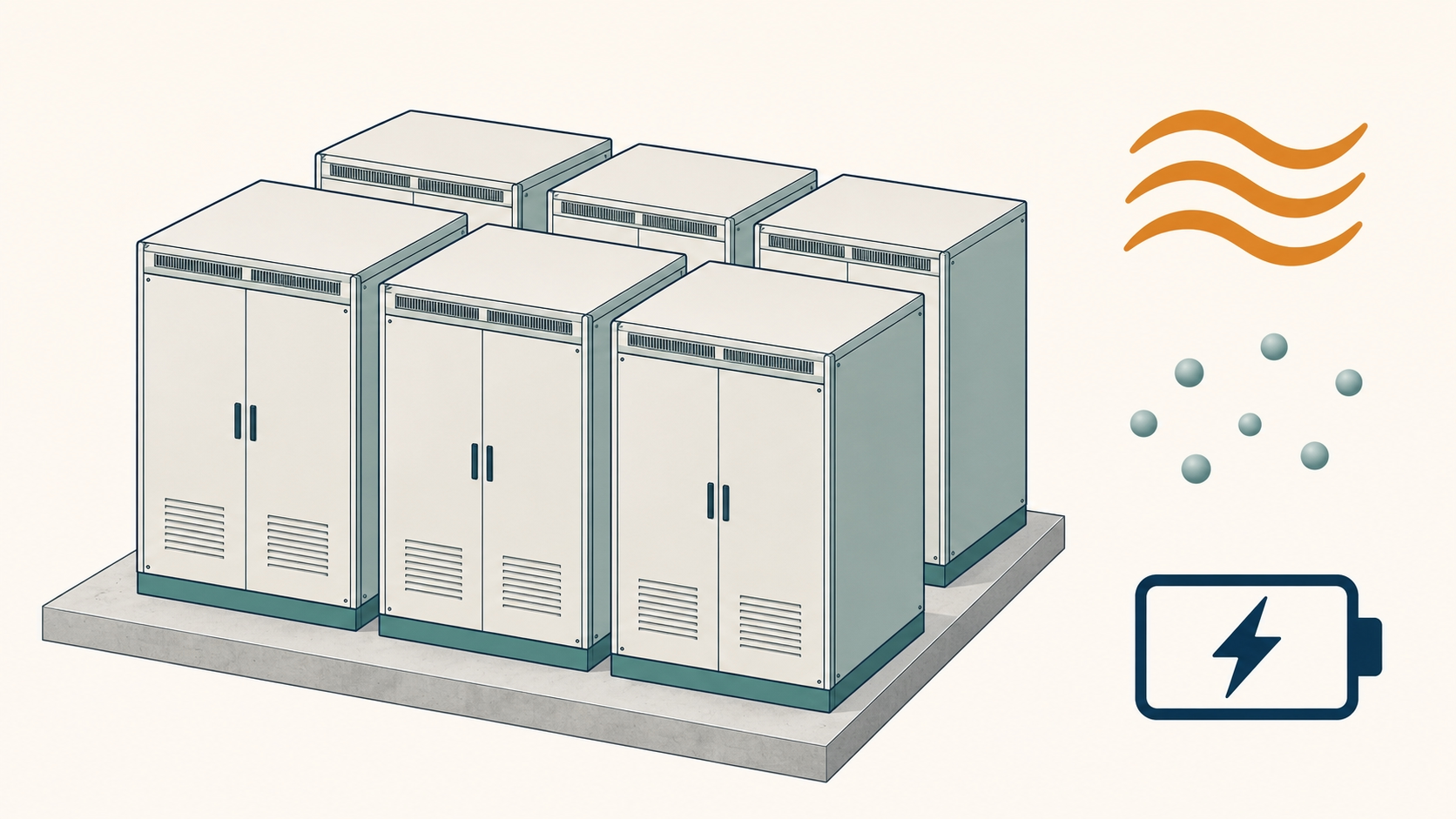

In procurement meetings, energy-storage safety often appears as an equipment list: a battery management system, fire-protection equipment, gas detectors and relevant test certificates. The list also needs to explain how these elements connect. When a signal is abnormal, what information do other systems provide, and what arrangements guide the people on site? Making those relationships clear helps an owner understand how the overall protection is intended to work.
For lithium-ion battery storage, safety planning connects design with continued use: why a configuration was chosen and how it will be maintained after handover. Gas monitoring supplies information under specified conditions and must connect with battery, electrical, fire-protection and operational arrangements. Considering its purpose within the whole system shows which capability it adds and which work remains with other elements.
One alarm may involve several kinds of hazard
Consider a hypothetical case: a duty operator receives an abnormal notification for a storage cabinet, alongside temperature information, battery status and a gas alarm. Having all three does not automatically establish an answer. Signals may come from different locations and have different update times or fault states. The recipient still needs the established notification levels and a clear understanding of which responses belong to trained personnel.
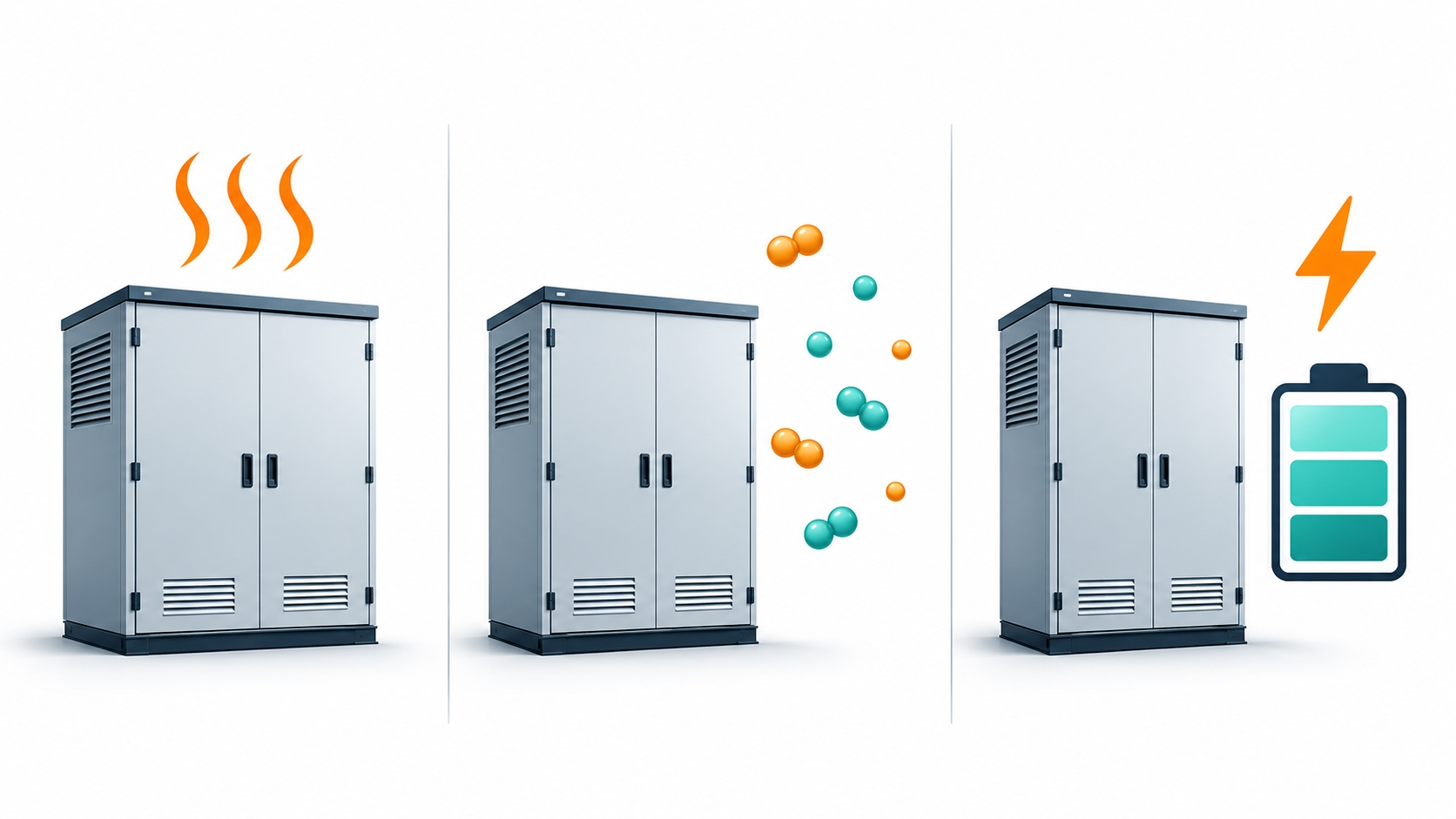
The National Fire Agency’s discussion of storage hazards explains that lithium-battery thermal runaway can involve high temperatures, fire and gas release, with reignition and electrical hazards potentially remaining after flames diminish. Thermal runaway involves uncontrolled heat-generating reactions within the battery; it is not synonymous with visible flames. An absence of flames therefore does not establish that the site is safe, and controlling an external fire does not show that all internal reactions and stored energy have disappeared.
Gas hazards also depend on the space. Battery chemistry, state of charge, equipment construction and incident conditions affect what is released; the enclosure and surrounding environment affect how it accumulates, moves or disperses. This makes “detecting one gas covers every incident” an oversimplification. Selecting a target requires supporting equipment-test and risk information, not simply copying the detector model used at another site.
Another relationship easily lost on a drawing is the connection between the equipment and occupied areas, including separation and access routes. A standalone outdoor installation, a factory equipment area and an indoor space involve different people and response conditions. During option appraisal, owners need the site, neighbouring uses and access conditions included in professional design discussions. Installations of equal capacity may need different arrangements because of those conditions.
Map the information already available before deciding what is missing
Battery management systems generally work with battery voltage, current, temperature and related states. Power conversion and control systems have their respective energy-conversion, dispatch and protection functions. Similar-sounding names do not mean they provide identical information or actions. When reviewing a design, separate what is measured, who receives it and what it triggers. A normal-status light on an overview display should not be mistaken for evidence that every subsystem is being monitored.
If gas detection is included, define the information it is intended to add. It may provide a monitoring lead for a particular release or meet a confirmed engineering requirement. The target gas, range, sensing method, response conditions and maintenance needs must correspond to that purpose. Until the purpose is clear, the additional capability of another sensor cannot be judged.
For example, in a hypothetical design appraisal, a team proposes an additional gas signal. The owner can ask which equipment evidence supports the choice, where the signal originates, how a communication failure appears, how an instrument fault differs from a concentration alarm, and who maintains it. These questions are more useful than asking for an unqualified number of minutes of advance warning. They also help suppliers define the limits of the function.
An early-detection claim needs a defined comparison point, test conditions and assessment method. A time difference observed in one test does not guarantee the same performance for every battery, enclosure and environment. Relevant evidence and a clear record of unvalidated conditions establish how far the supporting signal can actually be relied upon.
Actions following a signal also require design. Alarm displays, notifications, equipment control and emergency response may cross supplier and organisational boundaries. Whether functions are linked, when they act and how intended functions behave during power or communication failures belong in professionally confirmed design and test arrangements. The system integrator and the responsible electrical and fire-safety professionals need to confirm those relationships together and hand over the interface and test records.

Read the scope of a requirement before the certificate
Taiwan has several instruments and procedures relevant to storage safety. For example, the Bureau of Standards, Metrology and Inspection’s June 2025 Technical Specifications for Verification of Outdoor Battery Energy Storage System Sites focus on outdoor, grid-connected lithium-battery installations and state exclusions and authority-approved exceptions. That scope matters. The word “storage” does not make every technology, location and use subject to the same document.
The National Fire Agency’s 2026 explanation records a November 2025 revision of its fire-safety management guidelines, extending coverage to additional premises and battery technologies. Owners therefore need to recheck old project checklists. For an actual project, the responsible building, electrical and fire-safety professionals should assemble the applicable documents, editions, review subjects and authority advice into a traceable basis for the work.
International standards offer technical reference points, provided their names, versions, applicable equipment and adoption relationships are identified. Component testing, whole-system testing and site verification answer different questions. A certificate must be checked against the model, configuration and test conditions to determine whether it covers the equipment supplied. The presence of a standard number does not resolve the remaining engineering checks.
Keep a traceable line from design to acceptance
Before requesting quotations, owners can assemble the intended use and location, relationship to the grid, neighbouring activities, operating model and information requirements. These are inputs for the design team, not a request for owners to conduct their own hazard analysis. If the location or use remains undecided, listing those unknowns is more useful than allowing a provisional configuration to become an unquestioned final assumption.
During design, a useful handover arrangement links equipment lists, system drawings, applicable test documents, risk analysis, signal interfaces and emergency information. If a model changes, the team can identify the drawings, evidence and tests that need review. The complete submission must be assembled against the applicable specifications and review requirements, while document links make version changes easier to trace.
Acceptance should ask more than whether the display powers up. For monitoring and notifications, useful questions include whether messages identify the correct equipment and location, whether timestamps agree, whether faults are distinguishable, whether designated recipients actually receive messages, and whether results and outstanding items are recorded. Appropriately qualified personnel conduct the tests under approved procedures; the owner checks the results, outstanding items and follow-up responsibilities.

Suppose the supplier has completed equipment testing and the integrator has confirmed the display, but the night-time notification list remains unsettled. A handover gap still exists. After individual contract scopes are completed, someone must check the connections between them. Assigning responsibility for supplying data, receiving messages, checking results and closing outstanding items brings acceptance closer to actual operation.
Handover information must remain accessible on site. Manuals, as-built records, equipment locations, alarm and fault explanations, contacts and maintenance arrangements are difficult to carry forward if they remain only in a coordinator’s inbox. An owner-designated repository and version responsibility, with the same valid information available to on-site and remote personnel, extend handover beyond the day attachments were sent.
Maintenance means noticing changed conditions, not only checking boxes
In operation, sensing elements, power supplies, communications and auxiliary equipment need maintenance suited to their respective conditions. Planning should combine manufacturer requirements, applicable rules, professional assessment and site procedures instead of applying one interval to every item. Gas-monitoring inspection, calibration and replacement records should also identify the equipment and location, allowing reading changes to be considered alongside the maintenance history.
For abnormal events, retain the sequence rather than only the final note “resolved”. When the signal began, whether other equipment or communication problems accompanied it, what was checked, who acted and how recovery was verified can all help later interpretation. Operators record the event and notify the designated people under the procedure. Internal equipment investigation belongs to personnel with the relevant qualifications working under the safety procedures.
As a site operates, its original conditions may change. Adjustments to battery modules, control software, enclosures or nearby uses require the affected assumptions to be reviewed. Incorporating professional assessment and document updates into change management prevents drawings and response information from remaining frozen at acceptance, and allows later personnel to understand the modifications made.
Give people arrangements they can follow after an alarm
Relevant professionals and responsible organisations should coordinate response arrangements in advance, connecting notification, evacuation, access control, site information and external emergency services. The National Fire Agency’s hazard material supports trained personnel’s understanding of risk. Other site personnel follow established notification and response procedures rather than opening cabinets or attempting firefighting themselves. Clear prior responsibilities avoid having to assemble a response from scattered information during an event.
Exercises can begin by testing documents and communications: whether contacts remain valid, different shifts understand notification roles, responders can obtain site information and alternative contact routes are arranged. Findings can become tracked improvement items with assigned owners and follow-up checks. The next exercise can then show which handover gaps have been closed and which still need work.
An energy-storage safety proposal can be examined by following its information: where it originates, which decision it supports, who takes over and what evidence confirms that the arrangement works. Gas-detector selection belongs within that path. With design, acceptance, maintenance and response accounted for, an owner can better understand the protection acquired and the work that still requires continuing attention.
References
- National Fire Agency: Energy storage hazards and response considerations
- National Fire Agency: Introduction to the storage fire-safety management guidelines (2026)
- BSMI: Technical specifications for verification of outdoor battery storage sites (June 2025)
- BSMI: Example documents for outdoor battery storage site verification
MTI巨晶彙審