
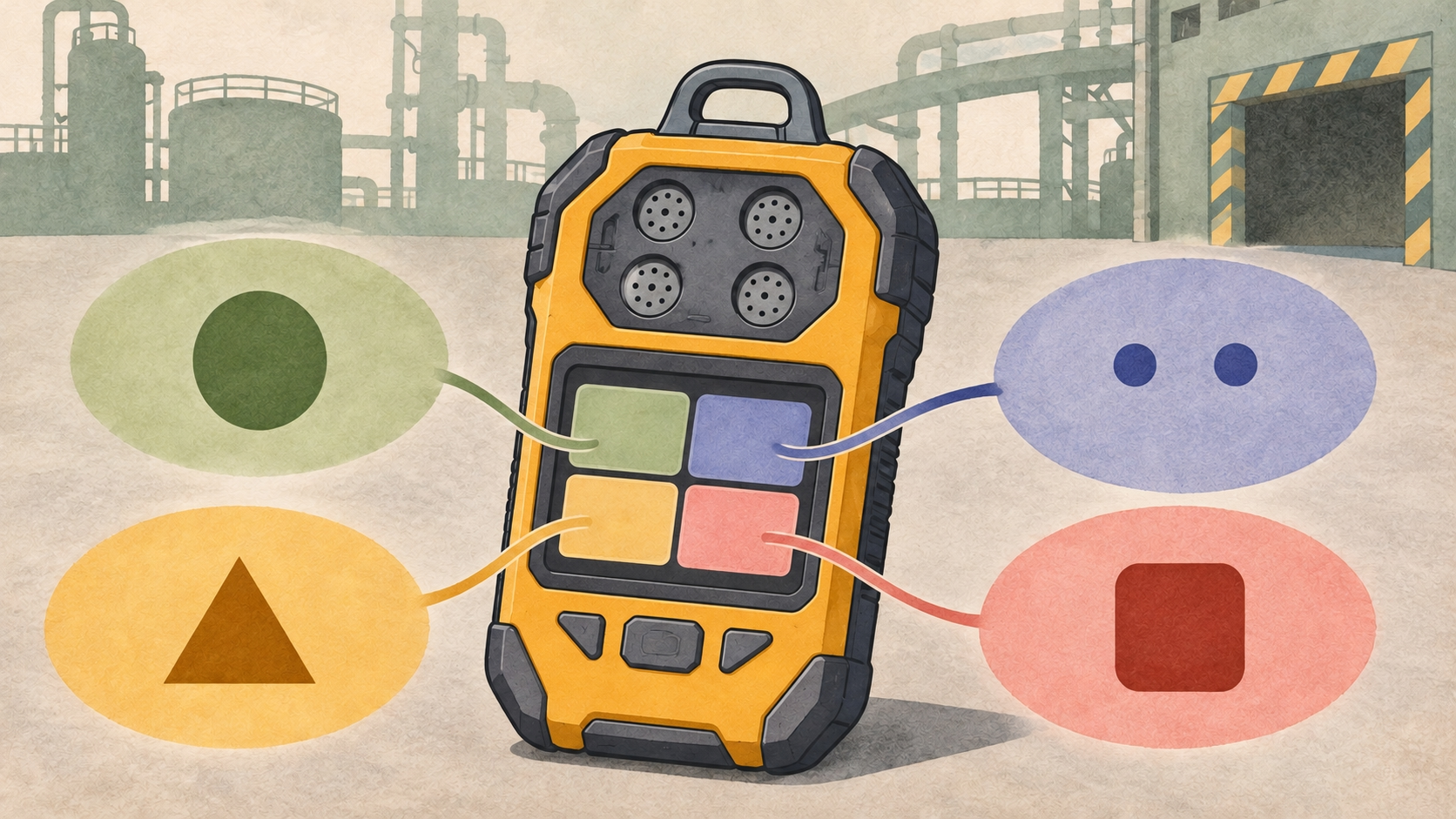

When you first hold a four-gas detector, its four readings may prompt a reasonable question: does this give a complete check of the air? Before buying, start with what the name means. Four-gas generally describes four monitoring channels. You still need to understand what each channel measures, its range and its operating conditions to know how the instrument can help.
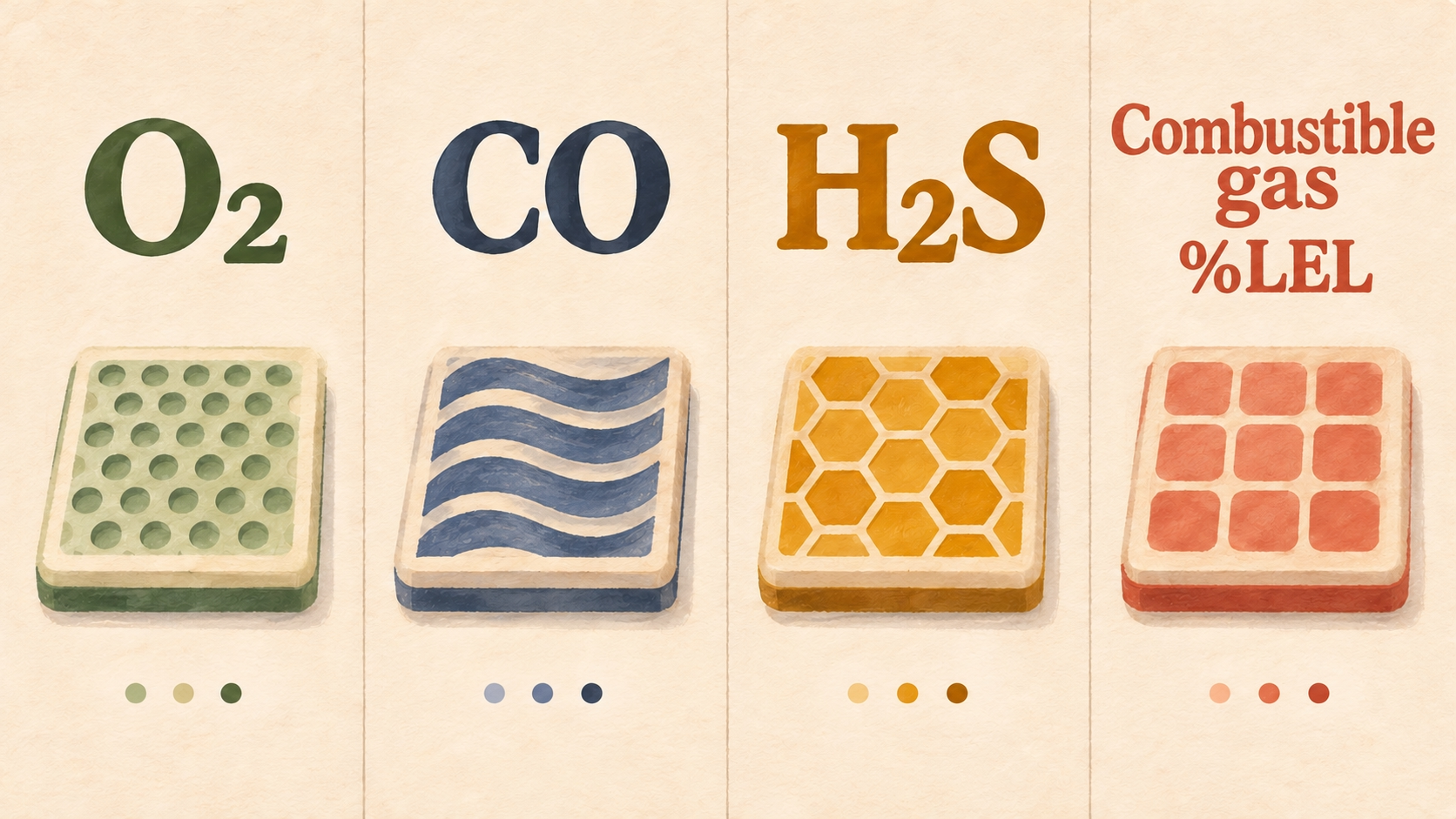
A common configuration covers oxygen, carbon monoxide, hydrogen sulfide and combustible gas, although the actual combination depends on the model. These channels address different monitoring questions. Combining them makes information more convenient to obtain; it does not identify every other substance in the air. The substances that may occur during the work remain the starting point for channel selection.
Four readings are not a certificate that the air is normal
The oxygen channel measures oxygen conditions. A toxic-gas channel targets a specified substance, while the combustible-gas channel assesses gases or vapours within its intended scope. Their units also differ. Oxygen is commonly shown as a volume percentage; toxic gases often use ppm, or parts per million. Combustible gas commonly uses %LEL, a proportion of the lower explosive limit. The same number in different fields cannot be compared directly.
Suppose, hypothetically, that a cleaning task uses a volatile chemical. Even with four channels, you need to establish whether the instrument includes an appropriate measurement method for that substance. A combustible-gas reading is not a substitute for assessing every toxic hazard, and an oxygen reading does not answer questions assigned to other channels. A field with no abnormal indication can only be interpreted within that channel’s operating limits.
Would adding more channels solve the problem? It may help, provided you know what needs to be added. Before purchasing, identify materials involved in raw materials handling, production, cleaning and maintenance, including possible residues, and have the hazards assessed. This is more useful than simply seeking the largest channel count. Safety data sheets provide substance information; actual working arrangements add the exposure context that paperwork alone may miss.
Turn carrying an instrument into a complete work task
Consider a hypothetical inspection with stops at several locations and occasional measurements at places that are difficult to reach. In addition to selecting channels, decide whether gas will reach the sensors by diffusion or through a pump and sampling accessories. A sample takes time to travel through a sampling line, and the materials and accessories must suit the target substance. A refreshed screen does not establish that the remote measurement is complete. Allowing for that interval gives the reading its proper context.
These issues can be easy to miss while reading specifications at a desk but become concrete at work. Can the instrument be operated with gloves? Are its alarms recognizable over workplace noise? Does its carrying position interfere with the task? Will the battery support the intended use? Suppliers explain functions, while users contribute actual operating conditions. Together, they can establish which features are useful.
A portable instrument is not necessarily a duplicate purchase simply because fixed detectors are already installed. A fixed point and a moving worker may need different information. Conversely, a device carried by one person may not cover unattended area monitoring. Defining the work before comparing equipment formats helps avoid the idea that one instrument can do everything.
After startup, can the instrument actually measure?
A lit screen and battery indicator show that an instrument has completed some startup steps. They do not establish how its sensors and alarms respond to gas. That is why function checks matter. US OSHA describes a bump test as a qualitative check of whether gas reaches the sensors and alarms function. By itself, this does not demonstrate measurement accuracy.
A calibration check asks a different question: does the instrument’s response to known conditions fall within the manufacturer’s acceptable range? Adjustment, when needed, involves full calibration. These three terms may appear in the same maintenance document, but they are not interchangeable. Before recording that an instrument was tested, specify which test was performed, which instrument was involved and what the result was.
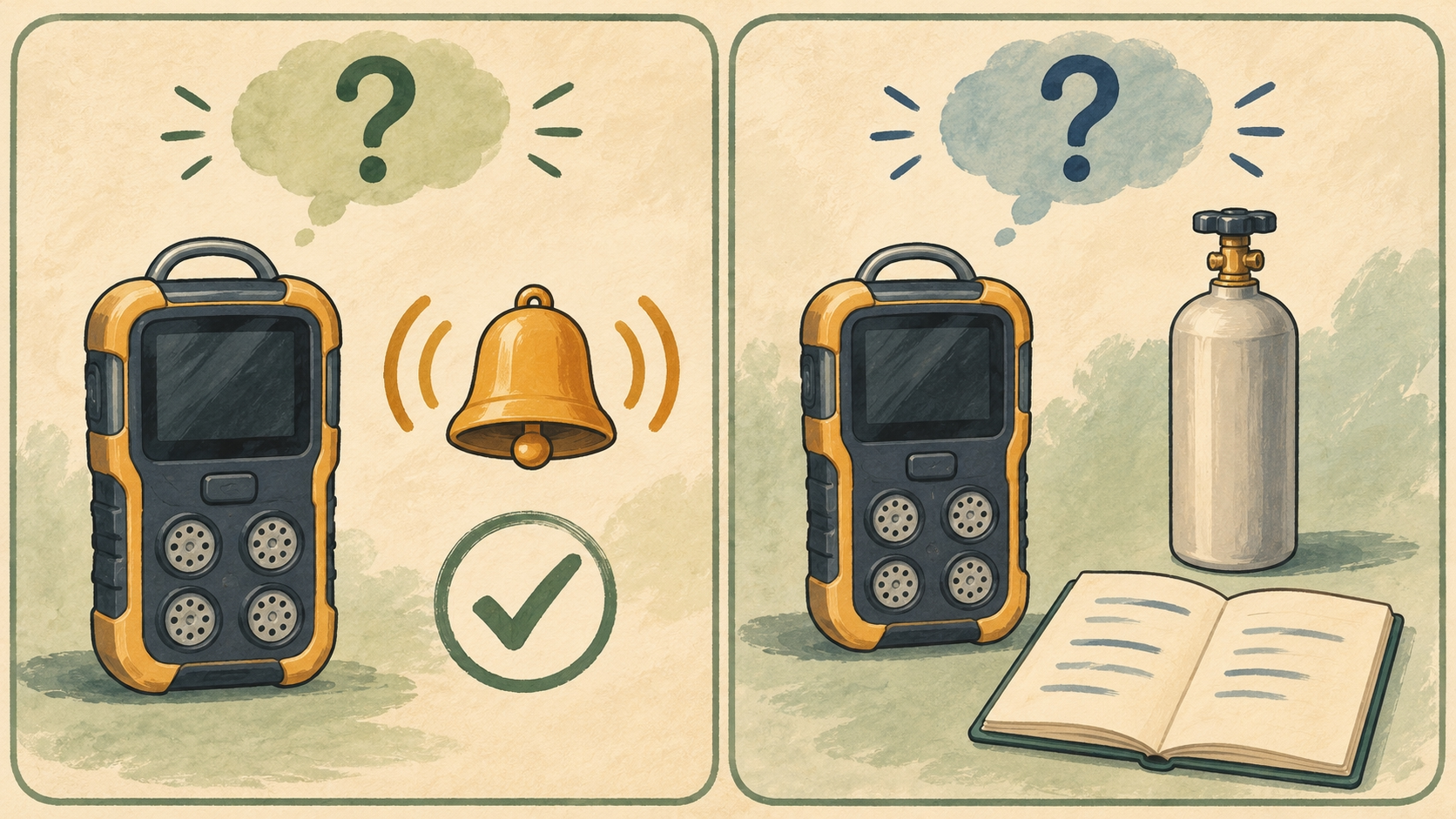
For managers, the distinction affects the issuing process. Who is qualified to perform the checks, where are results kept, and who arranges service or a spare instrument after failure? These decisions can be made in advance. Test gas and accessories are not universally interchangeable: gas identity, concentration, expiry and equipment compatibility need to follow the model-specific procedure. An abnormal instrument cannot remain a reliable basis for decisions simply because the day’s work is urgent.
The instrument itself is also affected by its environment. Some sensing technologies require adequate oxygen for a reliable response, while coexisting substances may interfere with or damage a sensing element. Memorizing one general rule is not enough. Training should cover the relevant parts of the actual manual, with another review when sensing elements or the work change.
Move from reading numbers to explaining a measurement
A useful training exercise is to ask a user to explain a hypothetical record: which instrument, when, where, for what task, what each field means, and whether the instrument was in serviceable condition. Then discuss who handles an alarm, a fault or an unexplained reading. This comes closer to the ability needed at work than a demonstration of buttons alone.
For confined-space work, gas monitoring is part of a wider arrangement. The UK HSE introduction also addresses risk assessment, staff competence and emergency arrangements, illustrating why a complex entry task cannot be reduced to a glance at a detector. Work in Taiwan still requires the applicable local rules and procedures. An overseas article or an instrument’s default alarm settings are not an entry criterion by themselves.
When choosing a first four-gas detector, bring a description of the work: where people will go, which substances may be present, what measurements and warnings are needed, and who will maintain the instrument. Match those needs to the instrument’s capabilities, and the questions each of the four channels can answer become clear. Conditions requiring separate confirmation can then be recorded just as specifically.
References
- US OSHA: Gas, Oxygen and Combustible-gas Monitors
- US OSHA: Calibrating and Testing Direct-Reading Portable Gas Monitors
- UK HSE: Introduction to Working in Confined Spaces
MTI巨晶彙審