
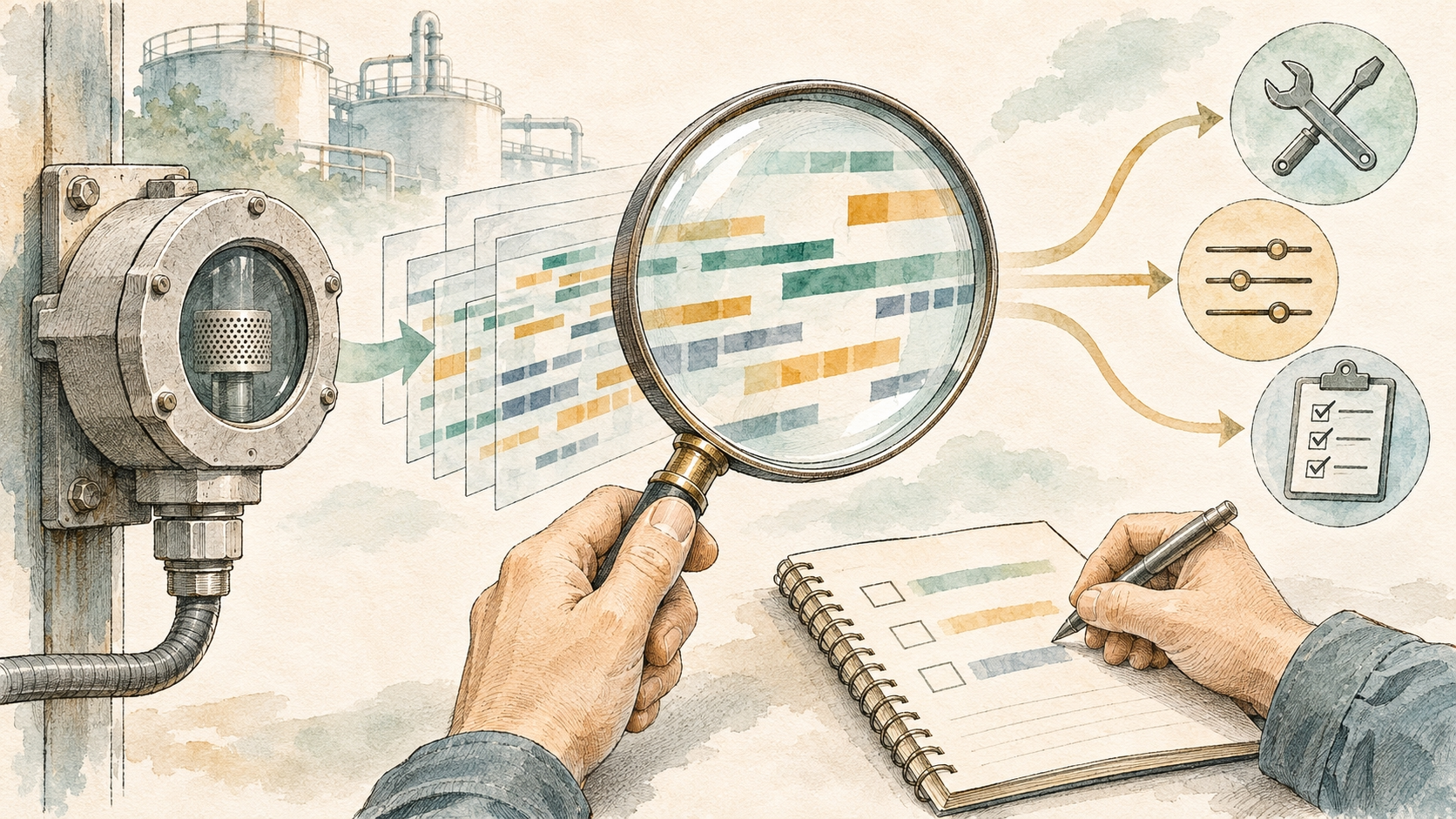

Which working decision does AI improve in a gas-monitoring system? That question deserves to come before the name of the algorithm. Identifying equipment for earlier inspection, finding periods worth investigating in extensive records, and studying a combination of sensor responses are different tasks. Grouping them as “intelligent early warning” may simplify a sales discussion while leaving acceptance criteria unclear.
The responsibility assigned to the system also needs definition. Flagging a potentially unusual period and determining that immediate safety action is necessary have different evidence requirements, validation needs and consequences. Describe the expected output in one practical sentence: what information will be provided, to whom, and for which action? Choosing an algorithm early will not fill that gap in responsibilities.
Three tasks often grouped under one label
The first task is checking data quality: readings that remain unchanged, interruptions in transmission, or increasing differences from a reference measurement under comparable conditions. Some problems can be detected with explicit rules rather than machine learning. Rules may be easier to explain, maintain and hand over. A more complex model that adds no useful evidence can make the basis for a flag harder to trace.
The second task is correction or estimation. With reliable reference data, researchers can examine relationships between sensor responses and factors such as temperature or humidity, then develop a correction for specified conditions. The result is a processed estimate and should be stored separately from the original reading. Combining the two in one field makes it harder to distinguish sensor changes from changes in the correction method or model version.
The third task is pattern recognition. Different sensing elements can produce different combinations of responses, which a model may use to distinguish classes represented in its training data. An early study documented by NIST used a 36-element array to analyze specified acetone and methanol mixtures. It illustrates the research approach, but its results belong with the materials, samples and test conditions. Recognition in that experiment does not establish an ability to identify any gas.
The three tasks can work together, but each still needs its own acceptance evidence. Detecting a lost connection does not establish that humidity effects have been corrected, and classifying one set of mixtures does not establish leak-prediction capability. Separate purposes allow each capability to be matched to its evidence, without using success in one task to endorse another that has not been validated.
Follow one hypothetical case from data to action
Suppose a site has a network of environmental sensors and wants to identify devices that may need inspection sooner. This is a hypothetical scenario without field measurements, and it does not assert that MTI products offer these functions. The objective is limited to supporting maintenance review, not controlling a safety interlock. That boundary clarifies the required inputs and what a useful result would look like.
Inputs include concentration, timestamps, device identifiers, units, validity status and relevant environmental measurements. Sensor replacements, inlet cleaning and calibration records should align with the same timeline. Without a note about a replacement, a model may treat the resulting signal change as an environmental pattern. More data can then reinforce the misunderstanding instead of resolving it.
Start with a comparison that people can understand: time-series plots, data completeness and differences from a credible reference. Then evaluate whether a model adds value. EPA quality-assurance guidance notes that automated checks may miss subtle problems or flag real environmental events as bad data. In practice, preserve the unusual observations and their context so that someone can review them.

If a model flags a device that diverges from others after rain, the output should include the period, comparison basis and completeness of the data, rather than only a red indicator. Maintenance staff can then inspect the inlet, device status, site conditions and reference information. Their finding may be an equipment issue, an environmental difference or insufficient evidence. Recording the outcome connects the flag to traceable work.
Along this workflow, the model ranks and flags information while people interpret the leads in context. A timing mismatch may call for a change in the data process; confirmed equipment needs call for maintenance. The model may not supply an elegant explanation every time. Helping someone search through thousands fewer records and reach a verifiable period sooner can still be assessed as a practical benefit.
Validation must extend beyond the most favorable data
Training and evaluation require appropriately separated data. In continuous monitoring, randomly splitting neighboring observations may leave both sets very similar. If deployment will involve different seasons or locations, the evaluation design should reflect those differences. There is no universal split ratio here; the question is whether the test represents the intended use, rather than a convenient route to a favorable score.
Metrics should reflect the cost of errors. Flagging normal periods increases review workload; missing equipment that needs maintenance may delay action. An overall accuracy figure can hide this distinction. For the maintenance example, record how often the model raised a flag, which cases required action, which remained inconclusive, and how much staff time was involved. This reveals the effect on the work itself.
“Insufficient evidence” should remain a possible outcome. A site may lack a reference instrument, complete maintenance records or a confirmed pollution source for a particular period. Forcing every case into a correct-or-incorrect label can send uncertain judgments back into training. Keeping an unresolved case open, with a note about the missing evidence, is more informative than inventing certainty to complete a report.
Deployment is not the end of evaluation. NIST’s AI risk-management materials note that changes in operating conditions and data distributions can challenge earlier assumptions. Sensor replacement, relocation, process changes or previously uncovered conditions warrant checking continued suitability. Recording versions, scope and reasons for reassessment provides a basis for reconstructing the method behind a later decision.
An unfamiliar mixture needs more than a confident label
A sensor array can offer richer response patterns than a single signal. A classification model nevertheless learns relationships represented in its training data. A new mixture, or familiar substances combined at different concentrations, temperatures or humidity levels, may lie outside the validated range. A confident-looking output does not resolve that question.
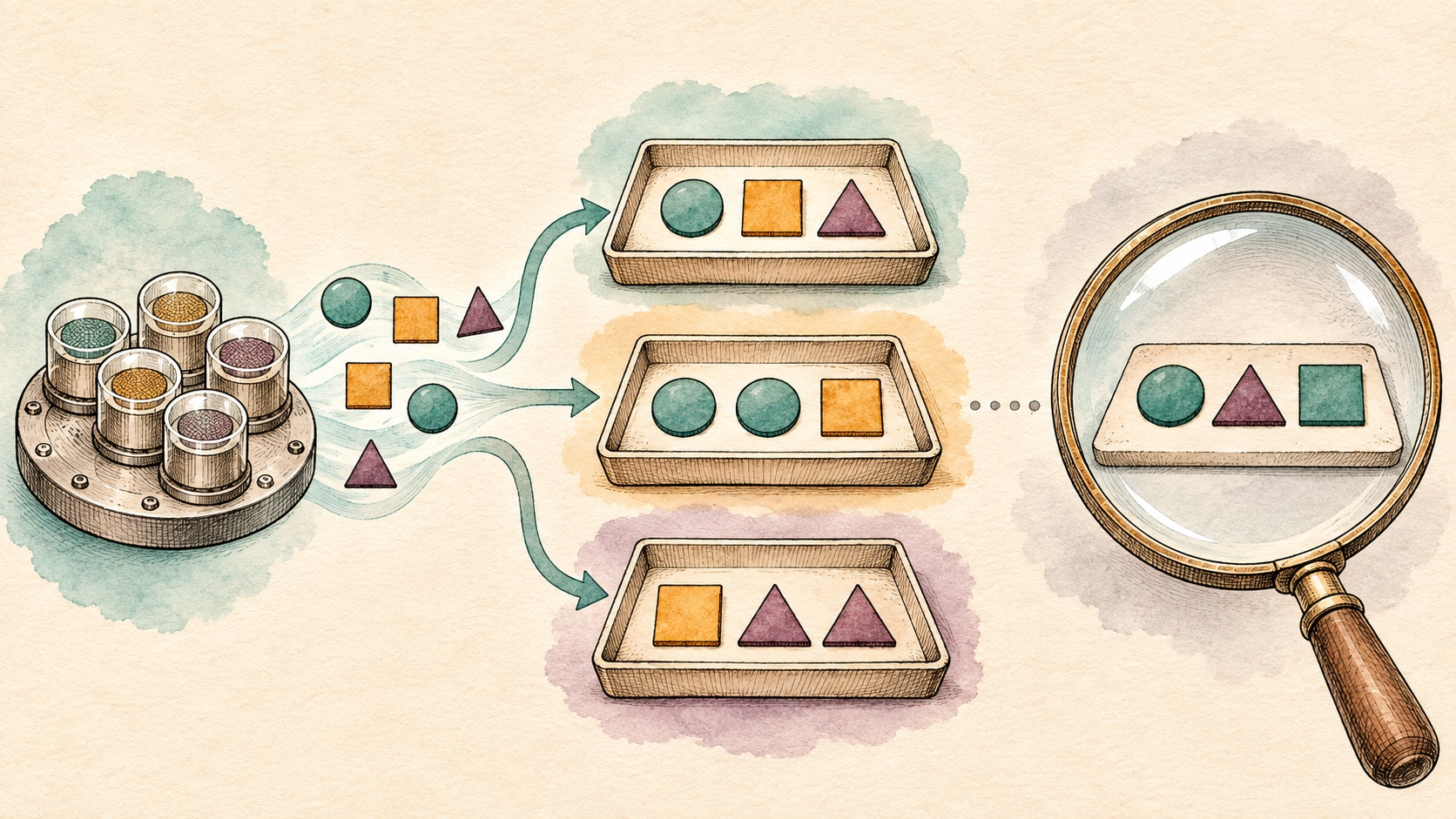
For users, it may be more useful to ask when the system should decline to classify than to demand a gas name every time. Which signals should be retained when it encounters an unknown, and how will the result be checked? Answering those questions helps move a research tool into a manageable workflow and prevents a classification label from being mistaken for a completed chemical identification.
Local or cloud processing: examine disconnection first
Once a model is deployed, processing location becomes an engineering choice. Local processing can reduce dependence on a continuous network connection, but must accommodate local computing resources, updates and maintenance. A central platform can make cross-device analysis easier while introducing questions about transmission failures, access and retention. These are design trade-offs, not grounds for declaring one arrangement more advanced by name alone.
A demonstration of normal operation is not enough. Ask how the display and workflow behave when connectivity is lost, data are stale or the model is unavailable. If an old reading remains visible, its age needs to be apparent. Users should also know which established functions remain available when analysis stops. Safety-related applications require separate validation of the protection design; an online analytics platform does not demonstrate that field protection is complete.
Procurement should include continuing costs: reference measurements, data preparation, staff review, platform maintenance and version management, as well as sensors and model development. A system producing many daily flags without anyone assigned to review them creates a new backlog. Matching automation to the workload the organization can actually handle makes the functionality more likely to be used.
Make the promised improvement demonstrable
Taiwan’s Ministry of Environment distinguishes national monitoring stations and other sensor deployments by their purposes, siting conditions and uses. That distinction matters for AI as well: denser data do not make every observation suitable for every question. Combining data collected for different purposes and under different conditions can lead a model to learn differences between sources rather than the environmental phenomenon of interest.
A requirements document can begin with the interpretation burden the user hopes to reduce, then describe available data, references, human review and acceptance scenarios. The supplier should state the outputs, conditions not yet validated and how continued performance will be checked after updates. Putting those details in one discussion gives “intelligence” something concrete to answer for and makes its value easier to assess through work.
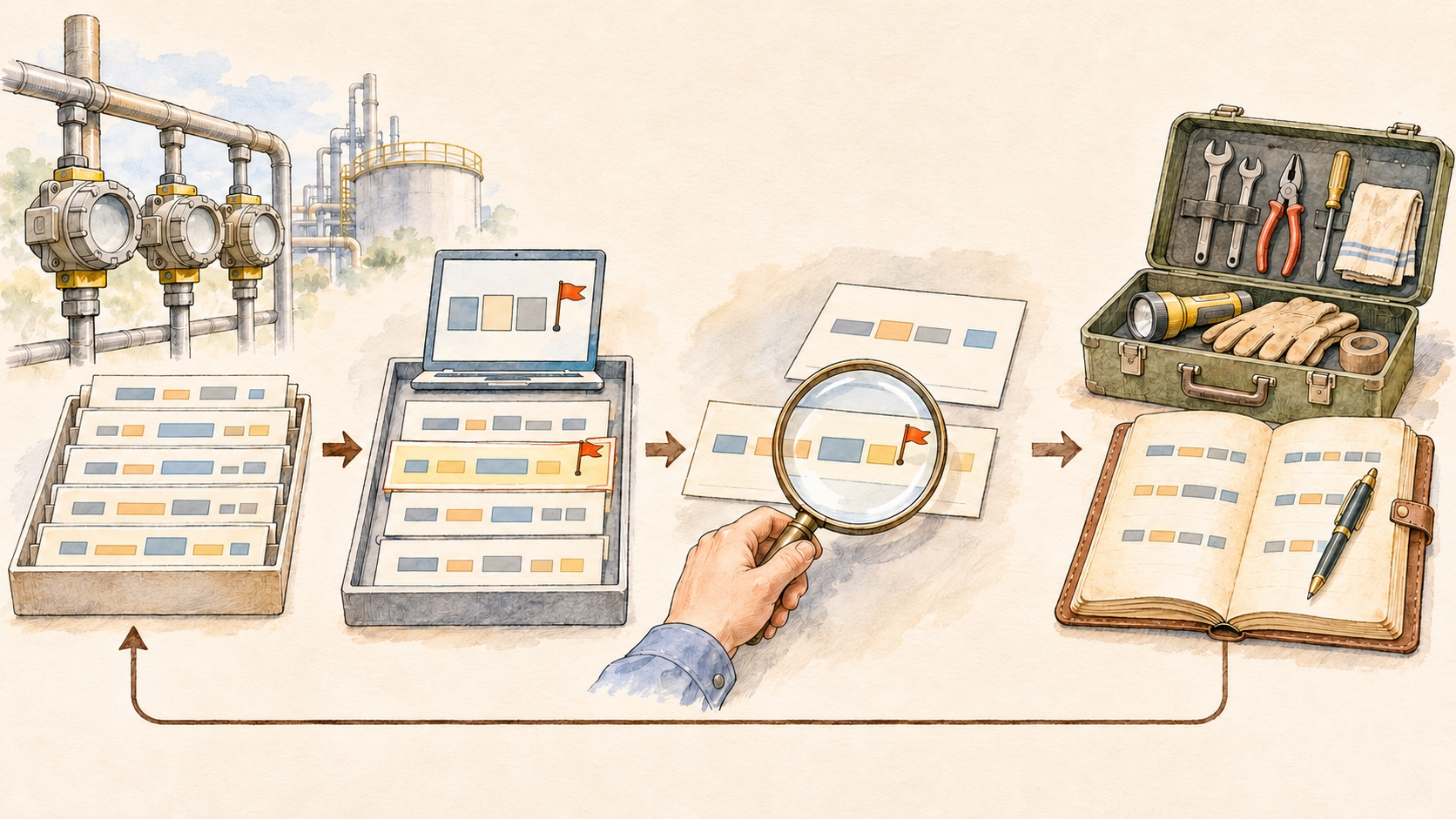
The answer to the opening question should point to a decision that can be checked. If the purpose is to help maintenance staff find equipment worth investigating sooner, assess evidence for that task. Substance identification or safety-related uses require their own validation. Sensors provide observations, models organize leads, and people take responsibility for judgment and action. Clear handoffs create the conditions for a system that can remain useful.
References: Taiwan MOENV: Differences Between National Stations and Sensor Deployments; US EPA: Quality Assurance for Air Sensors; US EPA: Air Sensor Guidebook; NIST: Neural-Network Analysis of a 36-Sensor Array (2002); NIST: AI RMF Playbook—Measurement and Ongoing Evaluation.
MTI巨晶彙審