


Shape and price are easy to compare on a quotation: one instrument is carried, another is installed on a wall. A more practical starting point is the information the user needs, where and when. Is something changing near process equipment when nobody is making a round? Has the surrounding gas environment changed as a maintenance worker moves elsewhere? Defining that information makes the different roles of the two types easier to see.
Consider a hypothetical factory. It needs routine monitoring near process equipment, while maintenance staff move between several areas during shutdowns. Asking which type is better quickly turns into a comparison of specifications. Separating routine monitoring, mobile inspections, temporary work and instrument maintenance makes it easier to see where fixed detection fits, where a portable instrument is needed, and how the two should connect.
One factory can have two monitoring tasks
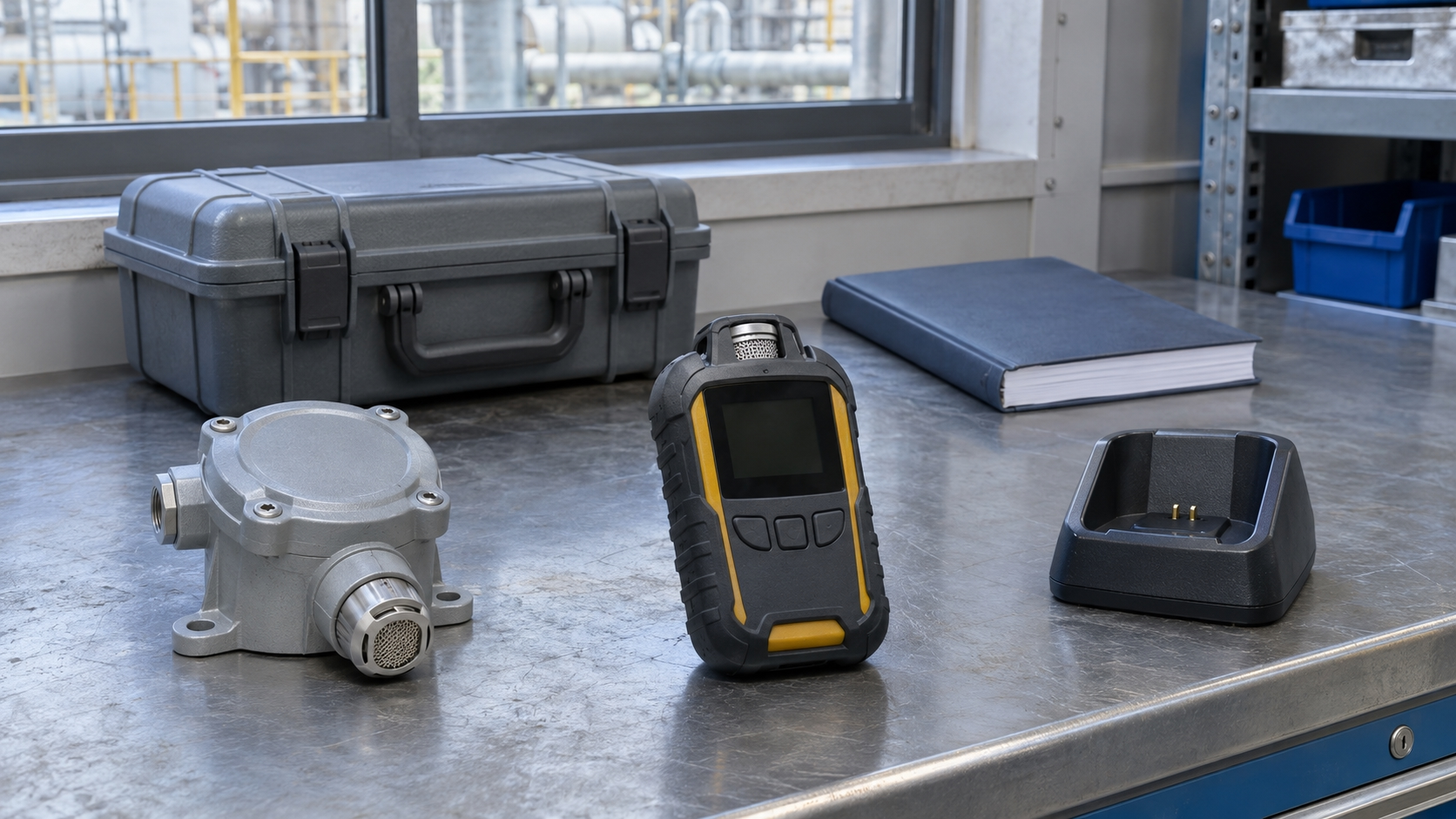
The UK HSE selection guide distinguishes fixed, portable and transportable equipment. Fixed detectors remain at assessed locations for continuous monitoring, while portable instruments move with the work. This describes working arrangements, not a ranking of quality. The substances an instrument can detect, and the range over which it can do so reliably, still depend on its sensing technology and configuration.
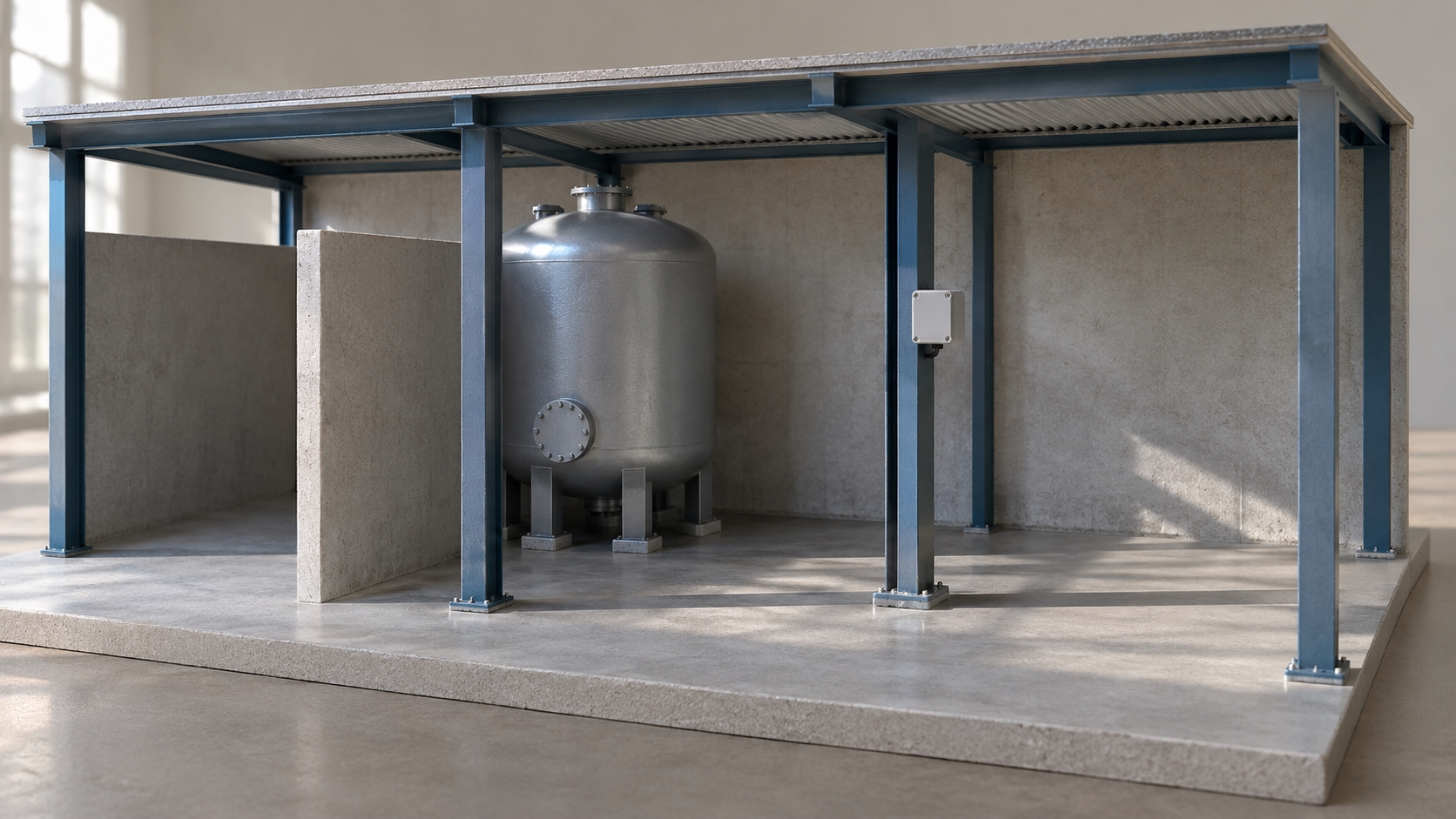
In our hypothetical factory, a fixed point can serve a defined monitoring objective, but it does not follow a worker who moves elsewhere. Nor does a reading at one point represent the whole building. Possible release locations, airflow, obstructions and worker routes should therefore be considered on the same site plan. Dividing a budget by the unit price is not a sound way to decide the number of monitoring points.
Mobile work raises a different question. Does the user need awareness of conditions while moving, or a sample from a specified location before a particular task? The former places emphasis on carrying and warning arrangements; the latter also involves the sampling method and accessories. Two instruments that can both be carried may serve different purposes. An indoor air-quality instrument should not simply be treated as a personal safety detector.
Power and alarms determine who can keep the task covered
Next, follow the instrument through a working day. Who issues it, charges it, checks its condition and takes it back? Between shifts, someone needs to check the battery and test results, rather than merely note that the instrument is back in the cabinet. These arrangements affect its practical availability. Published runtime must still be read with its test conditions; the effects of a sampling pump, communications and the environment need to be checked for the particular model.
For a fixed system, the power question extends along the signal chain. Which detectors, displays, control panels and notification endpoints depend on the same supply? What message will the responsible person receive after a power or communication failure? Whether backup is needed, and how it should be provided, belongs in the system design. Power at the sensing head alone does not establish that its information reaches someone.
The same applies to alarms. A portable instrument’s sound, lights or vibration must be recognizable under the working conditions. A fixed system may send signals to a control room or other equipment. Both need a defined recipient and response arrangement. If, hypothetically, a control room is unstaffed on the night shift, a notification route that appears complete during the day deserves another look before delivery.
Connectivity and usable records are separate purchasing questions
Datalogging or communications on a quotation does not mean that later analysis is already organized. Ask what needs to be retained: alarm events, inspection results or continuous trends? How will a record identify its location or work task? Who exports it, where is it kept, and who takes over at handover? The answers influence software, accounts and routine staff time.
For a hypothetical equipment investigation, a screenshot showing only concentration may not establish where the measurement was taken. A time, instrument identifier, work location and maintenance history allow the reading to be placed in context. That is the value of data management; it should not become a claim that cloud connectivity makes a sensor more accurate. Measurement capability and convenient recordkeeping need separate assessment.
Integration with an existing system also requires more than matching interface names. The supplier and control-system team need to agree on signal meaning, range mapping, abnormal states and responsibility boundaries. Even if two specifications list the same output type, displaying, recording and identifying faults still require design and acceptance documents that both parties can check.
Put operating conditions into the specification
Temperature, humidity, dust, cleaning operations and coexisting substances may all affect equipment selection. The US OSHA technical manual asks users to examine specificity, interferences, environmental limits and response time. Put what you want to measure beside what else is present at the site. This comes closer to the question of fitness for the task than comparing the number of display digits.
Where explosive hazardous areas are involved, ingress protection, explosion-protection suitability and supporting documents need separate checks. Taiwan OSHA’s installation guidance provides a framework linking area classification, selection and maintenance, but has its own scope. An overseas certificate or a shared product-family name is not a pass for every location. People with the relevant expertise need to compare the actual model and configuration with site conditions.
The cost of keeping equipment available
Fixed detection can involve design, wiring, installation and system testing. Portable equipment brings issuing arrangements, charging, function checks and spare-unit planning. These categories do not establish which option is necessarily more expensive. They show why quotations must be compared over the same period of use. A package that includes maintenance cannot fairly be compared with a price for the instrument alone.
Maintenance questions can be specific. Are sensing elements and consumables readily available? How will the original task be covered while an instrument is being serviced? Who keeps calibration records? When staff change, who transfers operating and management knowledge? Addressing these questions during procurement may reduce later coordination costs more than adding a feature that is seldom used.
If ITEL, 9500 or other devices are on the shortlist, ask suppliers to answer the same requirements sheet for each actual model: target gases, range, power, interfaces, certification scope and service. Product names help build a shortlist. The final decision needs current specifications and site conditions, rather than a selection inherited from another project.
Make the requirements sheet answer a concrete question
A useful requirements sheet does not have to begin with technical terminology. First describe the work the equipment should support, where measurements will be taken, who needs to see an abnormal condition, what records are needed, and how maintenance downtime will be managed. Users, safety staff, engineers and suppliers can then fill in the technical conditions, giving each specification field a clear purpose.
Returning to the hypothetical factory, the choice may be to use both: fixed points monitor defined areas, while portable instruments support assessed mobile tasks. Acceptance then has a concrete question to answer. During routine operation, shift changes, maintenance or abnormal events, where does the information come from, and who ultimately receives it? Connecting that path brings the equipment choice into everyday work.
References
- UK HSE: The Selection and Use of Flammable Gas Detectors
- US OSHA: Technical Equipment—On-site Measurements
- Taiwan OSHA: Guidance on Electrical Equipment in Explosive Hazardous Areas
MTI巨晶彙審