
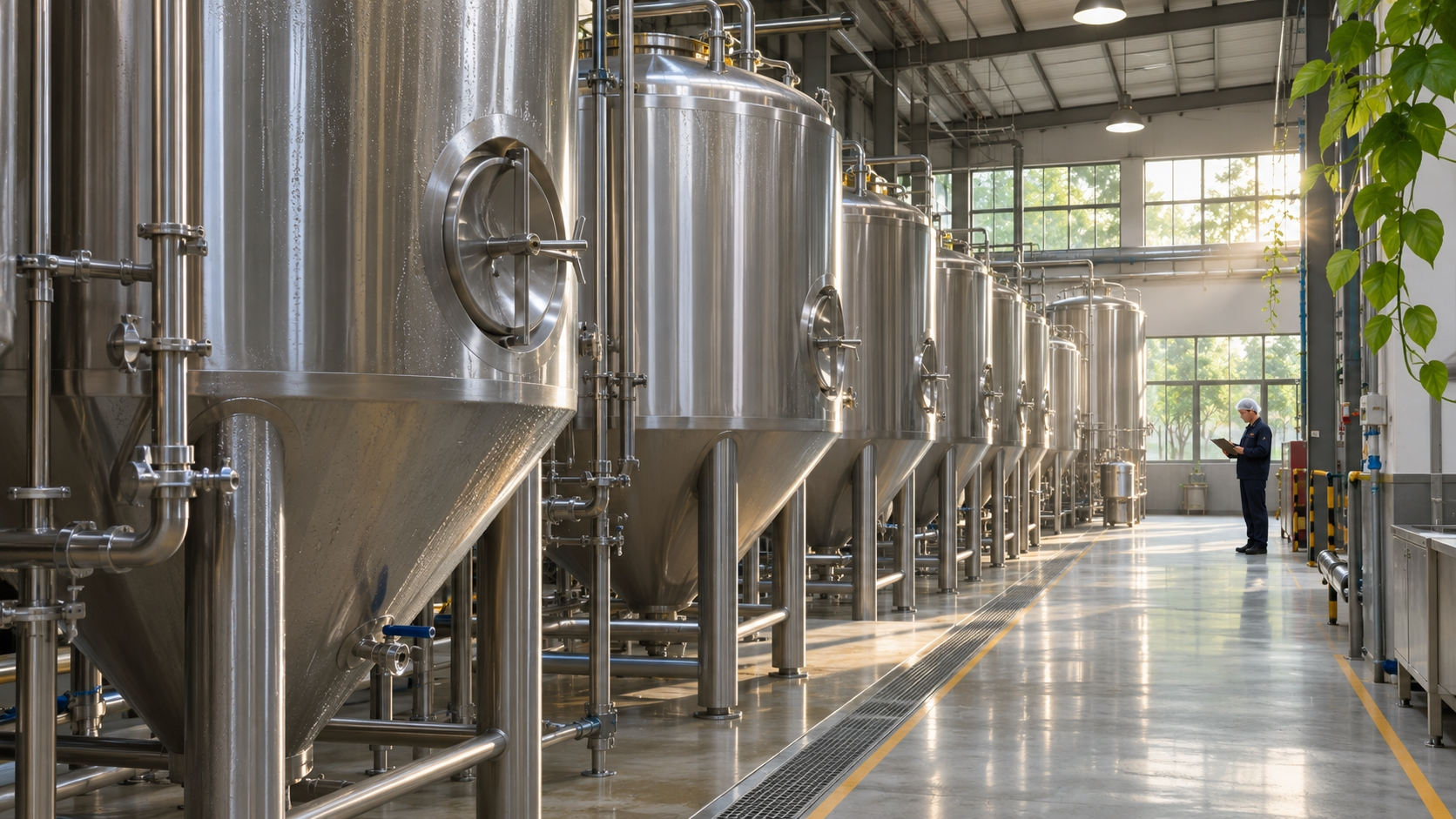

In a fermentation vessel, yeast turns sugar into alcohol and produces carbon dioxide. In a glass, bubbles are a familiar part of the drink. At work, however, people cannot necessarily sense where that same gas has gone. Gas management in brewing begins with both the process and the gas beyond the vessel. Recovery and reuse bring quality, equipment, schedules and cost into the same planning exercise.
Consider a hypothetical brewery. Several vessels ferment in staggered batches, equipment is being cleaned elsewhere, and the packaging line awaits the next batch. This is an explanatory scene, not an MTI customer record. Daily production figures may make the activities look separate. Following the gas instead reveals where fermentation, supply, cleaning and people can meet at the same time. Those interfaces deserve attention.
A process map that changes over time
During alcoholic fermentation, yeast uses sugars and produces alcohol and carbon dioxide. Preparation, fermentation, maturation and subsequent processing vary among beverages, as do equipment layouts and gas requirements. The US EPA describes beer production in stages including brewhouse operations, fermentation, aging or secondary fermentation, and packaging. This is a useful process outline, but it should not be treated as a description of every winery or distillery.
A manager’s map needs the order of activities as well as equipment locations. Concurrent fermentation, gas-supply changes, cleaning, maintenance and contractor visits all belong on a timeline. A floor plan shows where people stand; a schedule shows what is happening beside them. Comparing the two brings interfaces into view that an ordinary walk-through may miss.
For example, a passageway may temporarily become a work area during maintenance, or a normally closed door may be opened for deliveries. Neither change necessarily creates a hazard, but both may alter ventilation and exposure conditions. Recording these changes gives later monitoring results context, instead of leaving a series of unexplained fluctuations.
Carbon dioxide cannot be judged by smell
The UK Health and Safety Executive explains that carbon dioxide is colorless and odorless at room temperature and atmospheric pressure. Elevated concentrations can cause headaches, dizziness, confusion or unconsciousness, and gas can accumulate in tanks, cellars or low areas. Two issues need attention: the health effects of carbon dioxide itself and the risk of oxygen deficiency when it displaces air.
An oxygen reading therefore cannot answer every question about carbon dioxide. Nor does a detector measure every hazard simply because it is described as a multi-gas instrument. Listing the materials and activities actually present is more useful than starting with the number of sensor channels. Additional risks from cleaning agents, refrigerants or other process materials should be identified from actual use, rather than copied from another facility.
In the hypothetical brewery, deciding where to place fixed monitors cannot stop at the statement that carbon dioxide is heavier than air. Potential release points, airflow, obstructions, worker locations and maintenance access all affect whether the measurements answer the intended question. A fixed point measures conditions near that location; a worker moving to another task may encounter different conditions.
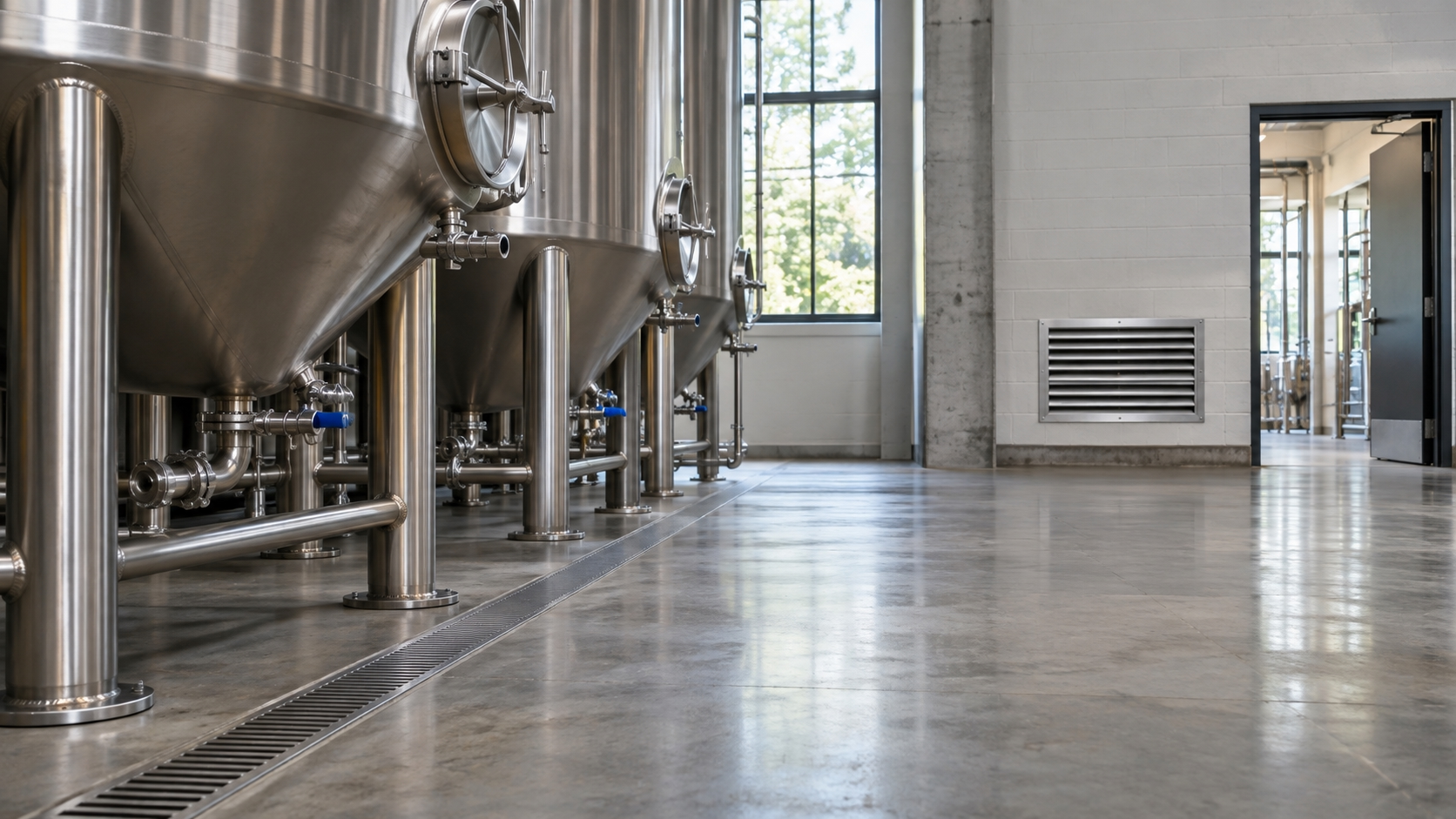
An alarm still needs someone to receive it. Planning should establish coverage at night and over holidays, and identify who can stop work, notify the area and initiate the established response when a signal reaches the control room. If the sound reaches only nearby workers who wear hearing protection, the warning arrangements need review. The alarm function and the person able to act on it must be connected.
Risk can remain after production stops
Cleaning and maintenance direct attention toward residues, tools and deadlines. An empty vessel, however, does not necessarily contain breathable air. Taiwan’s Occupational Safety and Health Administration has documented a fermentation-vessel cleaning accident in which a worker lost consciousness and a person entering to attempt rescue also became a casualty. Such cases show how an emergency can escalate when colleagues rush in to help.
The first question is whether the task can be completed from outside the vessel. If entry remains necessary, isolation, atmospheric testing, ventilation, attendants, entry authorization and rescue arrangements need to form one plan, implemented by trained personnel with defined responsibilities under applicable requirements. Buying a detector without establishing who may enter, who watches the operation and how rescue will work leaves the management problem unresolved.
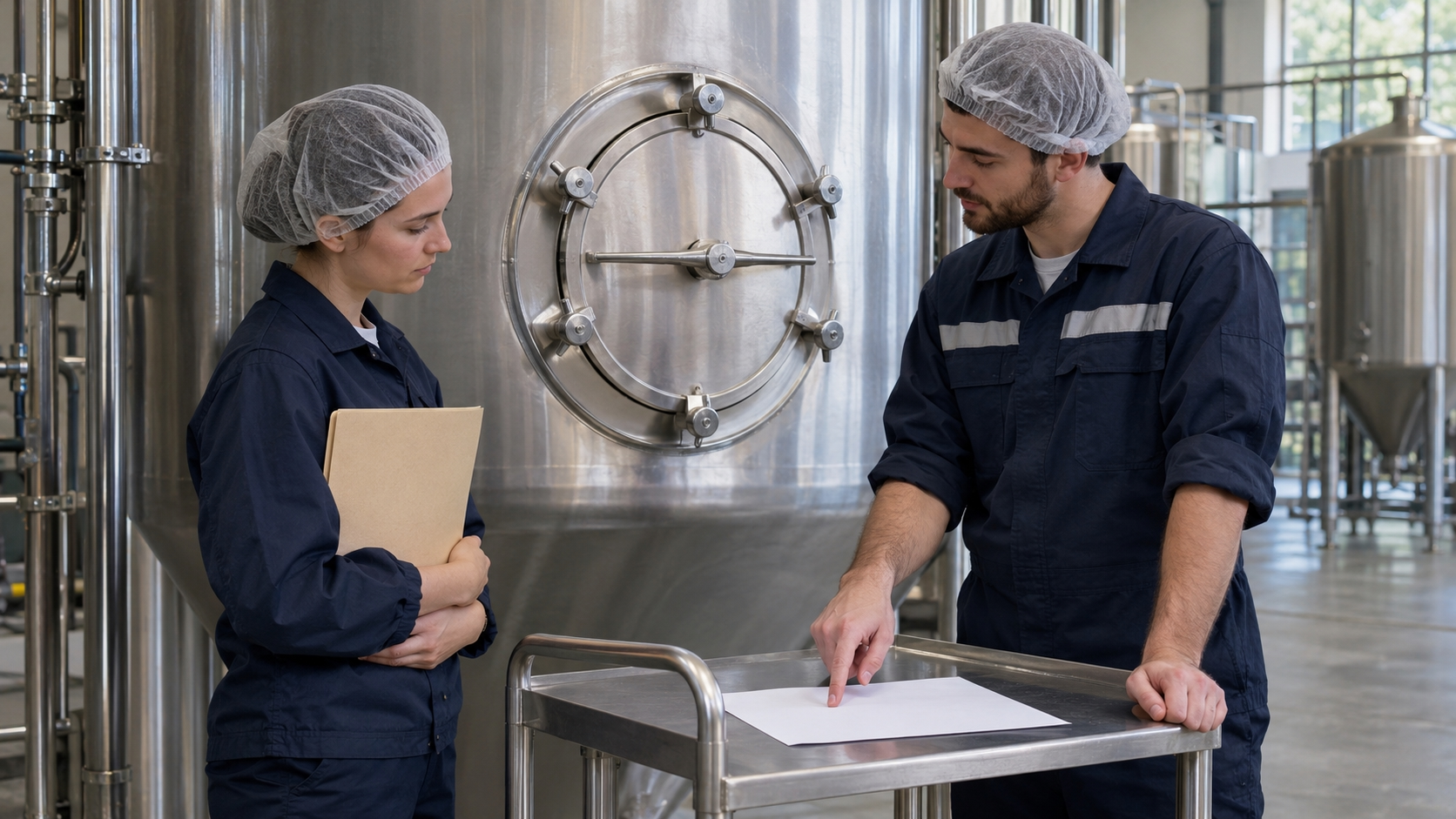
Handoffs between equipment, cleaning and production teams can leave gaps in shared information. Equipment staff understand the pipework, cleaners know their methods, and supervisors know the production schedule. When this information remains with separate people, each may see only part of the situation. Bringing equipment status, work boundaries, restrictions and contacts into a shared pre-work record is more useful than asking afterward who knew what.
Records also help the next shift interpret measurements. A blocked sampling inlet or monitoring suspended during cleaning can change what the data mean. Handover should distinguish measurements that remain valid from those under maintenance and indicate expected restoration. Otherwise, numbers may still appear on a screen after they have lost their original meaning.
Define the destination before recovering the gas
Once fermentation gas has been produced, asking whether it can be retained for reuse is reasonable. EPA process documentation describes breweries recovering and treating carbon dioxide for internal use. The technical route exists; whether an investment suits a particular brewery remains a separate decision. Start with the destination: where will the gas go, and what quality is acceptable there? A defined purpose gives competing proposals a common basis.
For food use, a high carbon dioxide concentration is not the only concern. Taiwan’s Ministry of Health and Welfare announced the transfer of carbon dioxide to food-additive management, effective July 2022. A project involving food use should check current permitted uses and specifications and provide appropriate treatment, testing and quality management. Producing the gas on site does not remove those responsibilities.
The next question is whether supply and demand coincide. Gas production may peak at particular stages, while demand follows packaging, transfers or other activities. Similar annual totals do not mean the daily schedules match. Comparing batch-level production and use is more informative than comparing annual sums. If storage is needed to bridge the gap, its equipment, space, operation and inspection must be included.
Treatment adds another set of questions. Fermentation gas may contain moisture and other components, and the treatment approach depends on feedstock, process and intended use. A supplier’s performance claim should correspond to defined inlet conditions, output quality and acceptance methods. Without those boundaries, the phrase “gas recovery is possible” can conceal unresolved questions about quality and operation.
Consider two hypothetical situations. One brewery has steady production and similar gas demand throughout the year. Another produces seasonally, with small batches and long idle periods. This is a comparison of conditions, not a verdict about brewery size. The first may find equipment utilization easier to organize; the second may be more concerned about start-up, storage and maintenance. Identical equipment will not produce identical economics under different schedules.
A cost comparison should use a consistent boundary for purchased gas and the costs added by recovery: equipment, energy, water, consumables, testing, maintenance, labor and handling of off-specification gas. Estimates can also examine lower production or equipment downtime. Comparing such scenarios helps a decision more than presenting a payback period without its assumptions.
Recovery and environmental benefit are different questions
Giving a gas stream another use does not finish the environmental assessment. An emissions claim needs to specify the processes being compared, the source of the gas being displaced, energy used by the additional treatment and emissions still outside the boundary. Until those assumptions are clear, recovered volume cannot establish an equivalent net emissions reduction. Defined boundaries make the eventual improvement traceable.
Where records are incomplete, establishing repeatable measurements may be more useful than rushing into a prominent project. Comparing output, water, electricity and purchased gas over the same periods, with notes on batches, cleaning and downtime, helps separate efficiency changes from changes in the product mix. This context is also easily lost when improvement work passes to another manager.
A brewery considering gas recovery, cooling improvements and packaging changes can compare the problem each addresses, the data needed and the maintenance capacity required. The projects need not all happen at once, and the first to be implemented should not automatically be described as the most effective. Keeping the basis for comparison makes the decision understandable and identifies changes that might justify revisiting it.
Bring safety, quality and cost into the same discussion
Production staff focus on scheduling and quality, safety staff on exposure, equipment staff on reliable operation, and purchasing staff on price and service. Their priorities differ for good reasons. Effective planning brings their questions together before equipment is selected: how will gas suitability be demonstrated, how will workplace risks be controlled, who handles abnormal conditions, and where will the records be kept?
A practical starting point is to trace one gas path: where it is generated, which equipment it passes through, and where it is used or discharged. Identify who works near it and which activities alter its condition. Each answer should connect to information or a responsibility that can be checked. When vessels, cleaning methods or shifts change, the map should change with them.
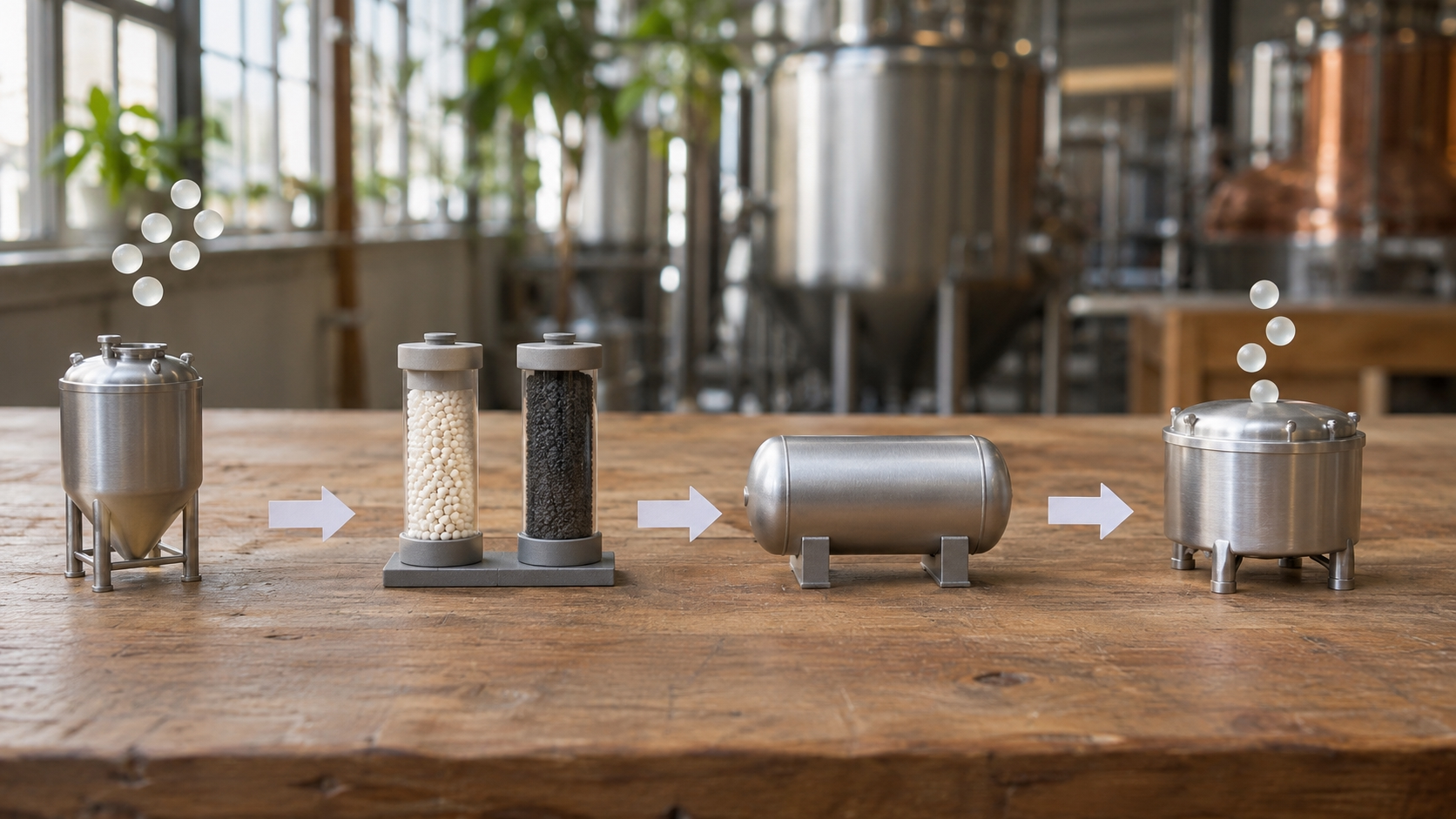
The bubbles in the glass remain familiar to the consumer. The brewery has a longer route to account for: generation, use, release or recovery. Improvements have a better chance of becoming routine when someone owns the quality, worker-safety and resource questions along that route. The next operator or manager should be able to understand how the equipment works, who maintains it and what evidence explains its results.
References: Taiwan OSHA: Hazards of Confined-Space Work; Taiwan OSHA: Major Confined-Space Accident Cases (Fermentation-Vessel Cleaning); UK HSE: General Hazards of Carbon Dioxide; UK HSE: Introduction to Working in Confined Spaces; US EPA: Malt Beverages Process and Emissions Background Document (1996); Taiwan MOHW: Carbon Dioxide Reclassified for Food-Additive Management (2021 Announcement).
MTI巨晶彙審